
Now Reading: 7 Key Features of a Successful Neighborhood Crime App
-
01
7 Key Features of a Successful Neighborhood Crime App
7 Key Features of a Successful Neighborhood Crime App

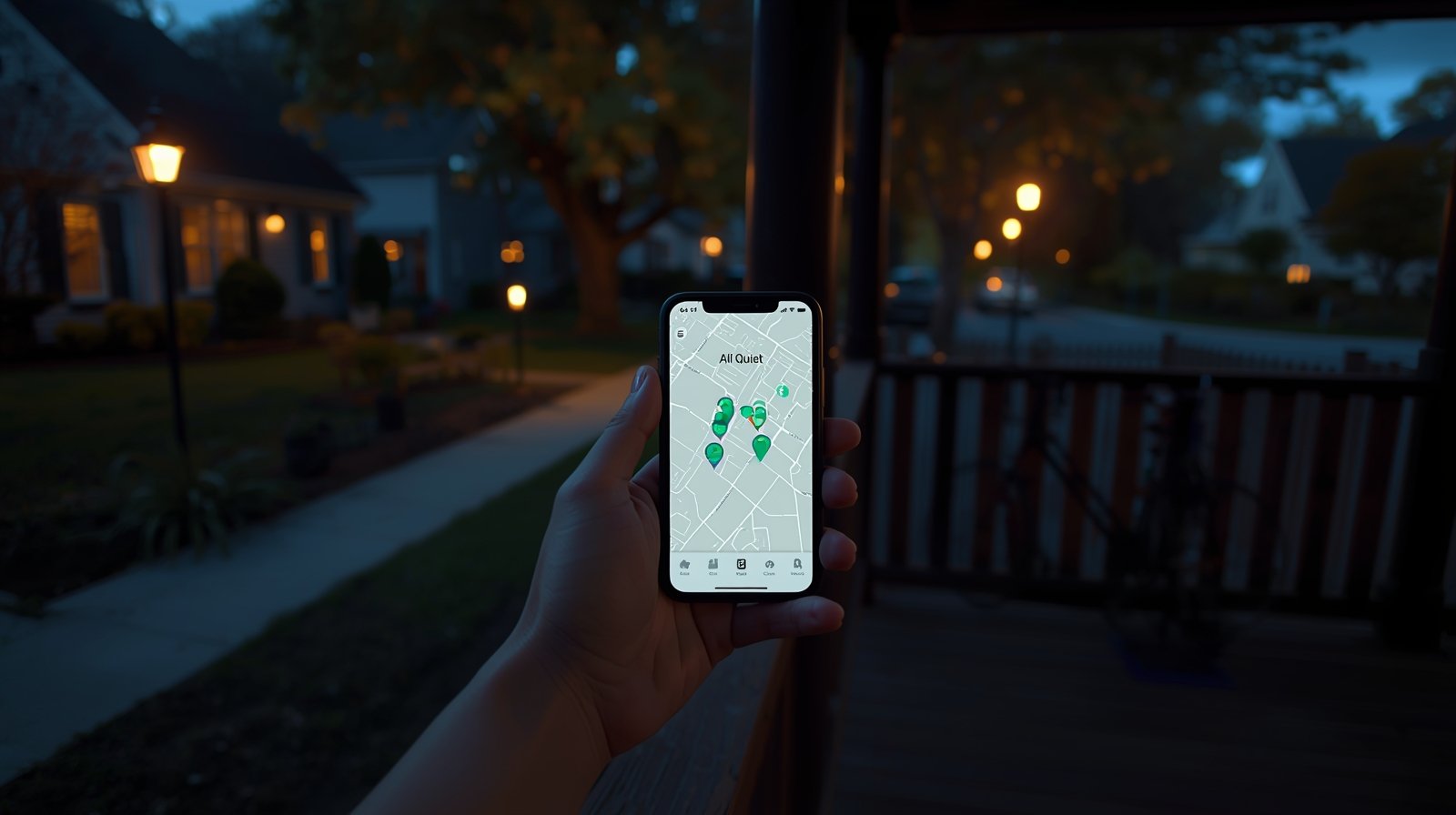
Living in a time when community safety is of the essence, technology provides the perfect ally. A neighborhood crime app can revolutionize how residents are informed, vigilant, and connected. Where reported rates of crime emphasize the need for proactive solutions, such an app is no longer a luxury but a community necessity.
This article gives insight into seven indispensable features necessary to make neighborhood crime apps effective, engaging, and vital for modern communities both in the UK and the USA. Additionally, we will explore practical strategies for building such an app on a budget, thus making safety tools more affordable for all.
1. Real-time crime alerts and push notifications
The core utility of any safety application lies in its immediacy of information. A successful neighborhood crime app has to send out geofenced, real-time messages directly to people’s phones about incidents like burglaries, vandalism, or suspicious activity.
Technical Implementation & Tips:
- Use cost-effective push notification services provided by Firebase Cloud Messaging, also known as FCM, or OneSignal. These platforms handle the complex delivery to iOS and Android devices.
- Build in smart geofencing so that notifications are hyper-local. A user in Manchester should not be bombarded with alerts for incidents happening in Birmingham.
- New Idea: Allow users to set customized alert tiers. For example, a user can choose between “Critical Only” (active threats), “All Incidents”, or “Pattern Alerts” (car break-ins spike). This approach respects the preference of the users and avoids notification fatigue.
2. Community Reporting & Evidence Upload
Empowering residents as the eyes and ears within their community generates shared responsibility. A seamless way of submitting a report in text, photos, or video evidence, optionally anonymous—is a must-have.
Technical Implementation & Tips:
- Use cloud storage (AWS S3, Google Cloud Storage) for economical, scalable media management.
- Include data validation prompts (e.g., “Can you describe the vehicle?” “What time did this occur?”) to improve report quality.
- New Feature: Introduce a “Verified Report” system. Reports that are corroborated by multiple users or align with official police data could be flagged, adding in an element of credibility to usergenerated content.
3. Interactive, data-rich crime maps
The key to understanding risk is visualising data. An interactive map plots incidents, filtering by type, date, and severity, helping residents identify patterns and hotspots in their locale.
Technical Implementation & Tips:
- Leverage Mapbox or Google Maps APIs for customizable, performant mapping.
- Visualize density of incidents over a selected time period using heatmap overlays.
- New Idea: Add “Safety Score” layers. Using historical incident data, foot traffic, and street lighting information from open datasets, the application could generate a dynamic safety score for different neighbourhood blocks; this would be useful in an evening walk or house hunting.
4. Secure In-App Community Channels
The building up of a network of vigilant neighbours requires secure, dedicated communication channels. Encrypted group chats for streets or neighbourhoods and community-wide announcement boards facilitate rapid information dissemination.
Technical Implementation & Tips:
- Make end-to-end encryption for private messages a priority to ensure user privacy.
- Put in place a set of strong community guidelines and moderation tools that prevent misuse, harassment, or unverified rumor spreading.
- New Tip: Set up event-specific chat rooms. During a large incident or severe weather, for instance, admins or trusted users can open a channel for coordination and support that is temporary and focused; it could archive itself after 24 hours.
5. Direct Integration with Local Authorities
The best apps facilitate a liaison between the public and law enforcement. Features allowing direct structured reporting to local police forces, such as the Met Police in London or the LAPD in Los Angeles, add immense value and legitimacy.
Technical Implementation & Tips:
- Develop secure RESTful API endpoints to accommodate data sharing with official crime databases where partnerships exist.
- Provide clear distinctions between community alerts and official police statements to avoid confusion.
- New Idea: A module for requesting resources could be included. Communities might collectively request additional patrols or a speed watch vehicle through the app to the local authorities as proof of organized citizen concern.
6. Proactive Safety Toolkit & Educational Hub
Beyond the reactive features, a top-class neighborhood crime app should be a source of prevention. Home security checklists, guides on forming Neighbourhood Watch schemes, directories of local support services, and emergency contact details are what such an app should provide.
Technical Implementation & Tips:
- Curate content relevant to both UK and US audiences (e.g., linking to UK’s Neighbourhood Watch network or USA’s National Crime Prevention Council materials).
- Send push notifications for “preventive alerts” during high-risk periods, such as holidays.
- New Tip: Create interactive safety drills. The app could walk a family through a virtual “home security audit” with a shareable report, for example, or provide an interactive family safety plan builder.
7. Administrative Analytics & Insight Dashboard
A backend dashboard with analytics is core for any community administrator or developer. It tracks engagement, report accuracy, incident trends, and app performance to help make data-driven decisions about community safety initiatives and app improvements.
Technical Implementation & Tips:
- Integrate budget-friendly: analytics tools such as Google Analytics for Firebase or Mixpanel.
- Visualize important metrics: daily active users, the most reported incident types, peak alert times.
- New Idea: Community Safety Reports. The dashboard could generate PDF reports, automatically each month, summarizing activity, which administrators could share with residents and with local law enforcement as a way to promote transparency and collaboration.
How to Build Your Neighborhood Crime App on a Budget
Coming up with a powerful neighborhood crime app doesn’t have to be prohibitively expensive. With strategic planning and modern development approaches, it is highly achievable.
- Adopt cross-platform: development by utilizing frameworks such as Flutter and React Native. Code once and deploy on iOS and Android; enjoy development time and cost savings of up to 40%.
- Embrace Open-Source & Third-Party Services: Don’t build from scratch. Use opensource libraries for maps, chats, and analytics. Rely on established cloud services (AWS, Google Cloud) for backend infrastructure, which operates on a scalable pay-as-you-go model.
- Start with an MVP: Go live with a basic set of features such as real-time alerts, reporting, and the crime map. Assess user adoption before deciding on more advanced features, such as predictive analytics.
- Community Grants & Partnerships: In both the UK and USA, local government schemes, police innovation funds, or community safety grants may be available for such initiatives. Collaboration with already established Neighbourhood Watch programs can be a good source of an initial user base.
- Phased Rollout: Go live in one active neighborhood or town and treat it as a pilot to get the issues out, collect testimonials and showcase value before rolling out into a bigger area.
Conclusion
A well-designed neighborhood crime app is more than software; it’s a digital pillar of modern community safety. By integrating these seven key features-real-time alerts, community reporting, interactive maps, secure communication, law enforcement links, educational resources, and actionable analytics-you create a platform that empowers, connects, and protects.
Following the budget-conscious development strategies outlined below, this can become a real vision for community groups, local authorities, and entrepreneurs. We apply technology, therefore, not only to report crime but also to prevent it, building resilient and better neighborhoods on both sides of the Atlantic.
More Reading: Understanding 鲁q 669fd: A Comprehensive Guide to Its Features and Benefits in 2025
< Black Charger Plates Bulk: A Stylish Solution for Event Planning in 2025