Now Reading: GLDYQL: The Next Big Tech Buzzword You Need to Know About in (2025)
-
01
GLDYQL: The Next Big Tech Buzzword You Need to Know About in (2025)
GLDYQL: The Next Big Tech Buzzword You Need to Know About in (2025)

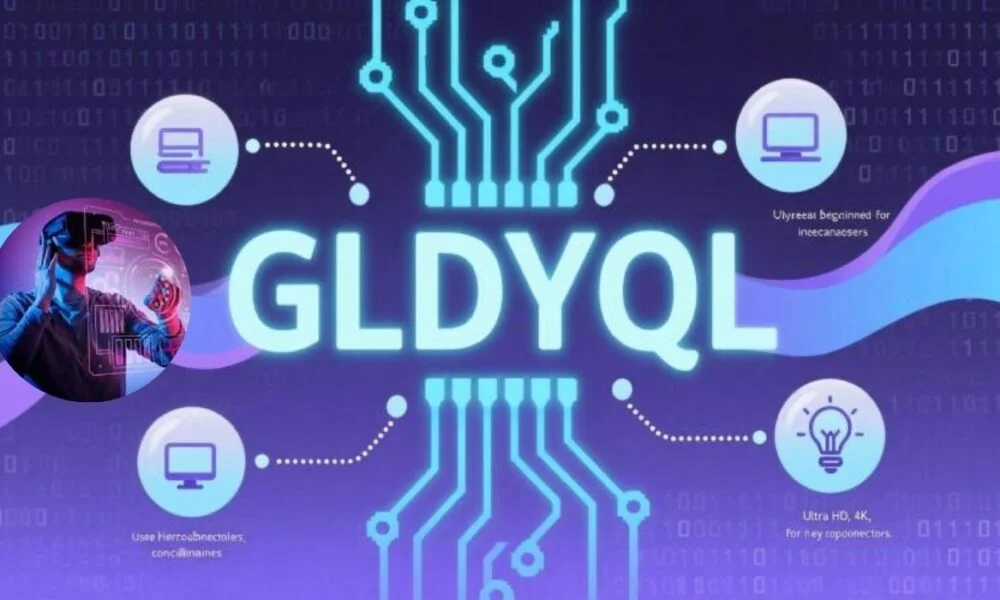
In the ever-changing landscape of technology, there is a new lexicon emerging at every moment. Many terms flash and then fade into obscurity, but a select few crystallize into transformative forces that redefine global industries. Emerging from the confluence of 2025’s most potent tech trends, one such concept is that of gldyql.
This intriguing term balances mystery with immense potential, rapidly gaining traction within innovation hubs ranging from Silicon Valley to London. Far from mere jargon, gldyql epitomizes nothing less than a fundamental shift in our approach toward digital infrastructure-a promise of a new paradigm of intelligent, secure, and hyper-efficient systems.
The following comprehensive guide will demystify this concept, considering its origins, core principles, and the tangible impact it’s going to have on businesses and careers throughout the UK, US, and elsewhere.
Table of Contents
- Decoding GLDYQL: Origins and Significance
- The Power of Tech Buzzwords: From Hype to Reality
- The Four Pillars of the gldyql Framework
- Adaptive Intelligence
- Distributed Trust Architectures
- Quantum-Informed Processing
- Seamless Systems Convergence
- Sector-by-Sector Transformation
- Healthcare & Life Sciences
- Retail & Consumer Markets
- Advanced Manufacturing & Engineering
- Financial Services & FinTech
- Pioneering Implementations: Case Studies in Action
- Navigating the Hurdles: Pragmatic Critiques
- A Strategic Roadmap for Integration
- The Horizon: What Comes After gldyql?
- Conclusive Analysis: Substance or Speculation?
GLDYQL: Its Origins and Meaning
To the uninitiated, gldyql may be nothing more than a strange string of letters, but in fact, it is a portmanteau that blends three boundary-pushing technologies: Generative Logic, DYnamic decentralization, and Quantum Layers. It’s not the name of a product but of an integrated operational framework. Think of it rather like a blueprint for constructing systems in which artificial intelligence, blockchain-derived security, and quantum computing principles do not stand in silos but are interwoven to solve hitherto intractable problems.
It is this conceptual model that is the talk of boardrooms from Wall Street to the City of London because it addresses the very core of modern digital transformation challenges.
The Power of Tech Buzzwords: From Hype to Reality
Scepticism towards the buzzwords of technology is healthy, but their role is important. The cloud, big data, and IoT started as leading-edge concepts before they were core to our digital way of life. They are conceptual shorthand that allows experts and strategists to quickly align around complex visions. The hype around gldyql is evidence of a greater maturation-a move away from experimenting with discreet technologies and toward architecting holistic interoperable solutions.
It heralds the shift from asking “What can AI do?” to “How can AI, quantum logic, and decentralized systems work together in concert to revolutionize our operations?”
The Four Pillars of the gldyql Framework
Understanding this concept requires the breaking down of its foundational components:
1. Adaptive Intelligence
Beyond static automation, this pillar includes AI systems that can engage in generative reasoning and contextual decision-making. These are systems that will design new solutions, create dynamic content, and predict market shifts with a nuance akin to strategic human thought.
2. Distributed Trust Architectures
Here, blockchain principles are abstracted way beyond cryptocurrency. It is about embedding immutable audit trails, transparent supply chain provenance, and secure, user-controlled digital identities directly into the processes of business, fostering unprecedented trust in data integrity.
3. Quantum-Informed Processing
The idea is that it doesn’t require a physical quantum computer on each desk, but integrates quantum algorithms and logic models into classical computing to optimize complex logistics, speed up material sciences research, and improve cryptographic protocols, all for a substantial leap in efficiency.
4. Seamless Systems Convergence
The real brilliance of the framework is in its interoperability. It advocates for platforms and APIs that enable seamless communication among legacy systems, new SaaS products, and proprietary databases, subsequently building an agile and scalable technological ecosystem.
Sector-by-Sector Transformation
Healthcare & Life Sciences
In the UK’s NHS or US hospital networks, this framework could enable truly personalised treatment plans. AI could analyse a patient’s genomics, while blockchain secures their health records, and quantum simulations model drug interactions at the molecular level—all within a unified system, accelerating both diagnosis and cure discovery.
Retail & Consumer Markets
Imagine a system that could synthesize real-time social sentiment, local weather, and inventory levels to predict demand spikes for retailers across the Atlantic. Blockchain serves to increase sourcing transparency for end-consumers into the ethics of sourcing, while quantum-optimized logistics automatically reroute deliveries within milliseconds to avoid disruptions.
Advanced Manufacturing & Engineering
The “smart factory” evolves further. AI predicts equipment maintenance needs, blockchain provides an unbreakable record of component origin and quality checks, while quantum computing optimises production line layouts and complex global supply chains for resilience and speed.
Financial Services & FinTech
Such integrated frameworks against fraud are under consideration by banks in London and New York. Decentralized ledgers verify every transaction in real-time, while AI models check for patterns that indicate cyber-attacks; quantum-resistant encryption secures the financial infrastructure of tomorrow.
Pioneering Implementations: Case Studies in Action
- A Transatlantic Logistics Company: An organization is piloting a routing system that is leveraging AI to evaluate traffic and port delays, quantum algorithms to calculate the most fuel-efficient routes, and blockchain to provide customers with a tamper-proof, real-time view into their shipment’s journey and carbon footprint.
- A University Consortium: Institutions across the UK and US. The adaptive learning platforms being developed leverage AI for personalized educational content, blockchain for validation and secure sharing of student credentials and micro-qualifications, and quantum-style logic to map out complex knowledge gaps related to each learner.
- Renewable Energy Grids: Energy providers are implementing grid management systems where AI balances supply and demand, blockchain enables peer-to-peer energy trading between households, and quantum computing optimizes the entire grid’s load distribution for maximum efficiency and minimal waste.
Overcoming the Obstacles: Pragmatic Critiques
Adoption does have its significant challenges:
- Concept Ambiguity: It being a framework and not a product is likely to result in vagueness. Clear, vendor-neutral standards shall be important here.
- Integration Complexity: Integrating these advanced technologies with the existing IT estates is a mammoth task that requires significant skill and investment.
- The Talent Gap: An acute shortage of professionals skilled in even one of these fields, let alone their intersection, could slow progress.
- Ethical and Regulatory Scrutiny: The power of pervasive AI and immutable ledgers will naturally attract the most intense scrutiny from regulators like the UK’s ICO and the US FTC in terms of robust ethical guidelines.
A Strategic Roadmap for Integration
For business leaders considering this journey, a measured approach is paramount:
- Perform a Capability Audit: Don’t chase the trend. Identify one critical business pain point-be it supply chain opacity, customer service bottlenecks, or R&D cycle times-where an integrated tech approach could yield a clear ROI.
- Build cross-functional literacy: Through training programs that break down silos between your data science, IT security, and operations teams. Foster a common understanding of these converging technologies.
- Pilot with Modular Solutions: Begin with cloud-based services that offer AI or blockchain-as-a-service. This allows for testing components of the framework without colossal upfront capital expenditure. Platforms from major providers like Google Cloud, AWS, and Microsoft Azure offer such modular tools.
- Forge Strategic Partnerships: Collaborate with universities, specialist startups, and consultancies. The ecosystem is evolving too rapidly for any single organisation to master all facets internally.
- Prioritize Data Governance: The entire system’s effectiveness is directly related to the quality and ethics of the data. Design comprehensive data governance practices right from the outset that adhere to GDPR, CCPA, and other regional requirements.
Horizon: What Lies Beyond gldyql?
This is a trajectory toward ever-greater ambient intelligence. In other words, we will see the principles embodied by this framework become the default standard for enterprise IT architecture. Future developments may include:
- The Rise of “Self-Healing” Systems: Infrastructures that can autonomously detect, diagnose, and repair security breaches or performance issues.
- Personalised Digital Twins: Extremely accurate, dynamic simulations of customers, patients, or products to hyper-personalize and assess risk.
- Democratic AI Development: Blockchain-based platforms audit AI training data and decision-making processes, thus making AI more transparent and accountable.
Conclusive Analysis: Substance or Speculation?
Is Gldyql the future of tech? While the precise term will most likely evolve, the integrative principle behind it is quite certainly the real deal. It is both a logical and a necessary response to the limitations of disparate technologies. For businesses and professionals operating in the competitive USA and UK markets, engaging with this convergence remains less about adopting a buzzword and more about future-proofing their operations.
It’s the organizations that take the lead to tap into the synergistic power of Adaptive AI, Distributed Trust, and Quantum Logic today that will define the competitive landscape of tomorrow. Understanding, strategizing, and then taking the first deliberate step toward integration marks the beginning.
More Reading: 7 Key Features of a Successful Neighborhood Crime App